|
|
Last
Modified on
Jul 16, 2026
What Hollywood Teaches All of Us About Lawyers
Think for a moment about every lawyer you have ever pictured in your mind. Not a real one. The image that appears when someone says “lawyer.”
For most people, that image was assembled long before they ever sat across a desk from one. It was assembled in front of a television, in a movie theater, on a streaming app late at night. Jack McCoy pacing the courtroom in Law & Order, voice rising as he closes on a witness who finally cracks. Tom Cruise in A Few Good Men, leaning forward and demanding the truth. George Clooney in Michael Clayton, world-weary and tactically brilliant, fixing a problem nobody else can fix. Idris Elba in Molly’s Game, walking his client through a moral and legal minefield with quiet, deliberate command of the facts. Even Matthew McConaughey in The Lincoln Lawyer, two steps ahead of opposing counsel and three steps ahead of his own client, holding the whole strategy in his head while he moves between courthouses. He knows the law, he knows the players, he knows the file, and that is what lets him think on his feet.
These performances are gripping for a reason. They show lawyers who are prepared. Lawyers who know the rules of evidence cold. Lawyers who can stand up in front of a judge or a jury and tell a clear, compelling, accurate story without flinching. Lawyers who do not freeze. Lawyers who, when the stakes are highest, are at their best.
That is what people expect when they hire a lawyer. They expect competence under pressure. They expect strategy. They expect someone who has done this before, who knows what is coming, and who can guide them through one of the most stressful experiences of their life with a steady hand.
It is a reasonable expectation. It may be the most reasonable expectation anyone has ever had of a service professional. You are paying real money. The outcome will shape the rest of your life — your children, your finances, your home, your future.
Here is the part nobody tells you. The path from law school to that level of competence is not automatic. In fact, the system is set up perfectly to make sure it does not happen on its own.
How Law School Actually Works
Law school is 3 years long. It is expensive. It is intellectually demanding. And none of it prepares a graduate to do the things a client will hire a lawyer to do.
Every law student spends 3 years reading appellate opinions: decisions written by judges, often a century or more old. The academic theory is that by reading these opinions and being interrogated about them in class, the student will absorb how legal reasoning works.
At no time does law school teach its students how to talk to a client who has just been served with divorce papers and is sobbing in the conference room. It does not teach anyone how to take a deposition, how to pick a jury, how to make an opening statement, how to cross-examine an expert witness, or how to handle a baseless legal objection.
Law school does not teach students how to manage client money. It does not teach or discuss how to write a fee agreement that is fair to both sides. It does not teach how to bill time honestly, how to staff a case efficiently, how to know when to bring in a forensic accountant or a custody evaluator. It does not teach students how to return phone calls, how to set expectations, how to deliver bad news, how to say no. It does not teach anything about client service.
At the end of three years, the graduate takes the bar exam, a multiple-choice and essay test that measures none of the skills above, and is then handed a license that says, you are now ready to practice law. The graduate is not ready. They are told they are ready. They believe they are ready. The system has handed them a credential that says they are ready. But they are not.
This is structural. It has been the structure for over a hundred years. Universally, the best lawyers in the country confirm that they learned nothing about the actual practice of law in law school, and that everything they know they learned afterward, the hard way, often on the backs of clients who did not know any better.
Continuing Legal Education Does Not Fix It
Every state requires lawyers to complete 12 or so continuing legal education (CLE) hours to keep their license. Most of those hours are spent in hotel ballrooms or on webinar. But almost none of it is skills training. Almost none of it involves standing up, taking a witness, getting critiqued, doing it again, doing it better. Almost none of it involves being watched by an experienced trial lawyer who can tell you, honestly, that the question you just asked was a bad question, that you led your own witness, that you opened a door you should have left closed, that your closing argument lost the jury in the second minute.
You can practice law for 30 years and never once be evaluated on whether you are any good at it. You can try cases for 30 years and never once be coached on how to try them better. You can hold yourself out as a trial lawyer for an entire career without ever submitting your trial skills to genuine, expert scrutiny.
This is the central, uncomfortable fact about the legal profession that almost no client knows: experience and skill are not the same thing.
Experience Is Not Skill
Think about anyone you have ever known who has done something for a long time but is not actually very good at it. The home cook who has been making the same three dinners for twenty-five years, with the same lumpy gravy and the same dry chicken, and would lose a competition to a sixteen-year-old who has actually been trained. The recreational golfer who has played twice a week for two decades and still has the same slice they had when they started, because they never took a lesson, never had a coach record their swing, never had anyone with real expertise tell them what they were doing wrong. The driver who has driven for 50 years and still cannot parallel park, because nobody who knew what they were doing ever stood next to the car and walked them through it. The musician who has played the same instrument since childhood but never learned to read music, and whose playing has been frozen at the same intermediate plateau for thirty years.
Experience, by itself, is just repetition. Repetition without feedback, without coaching, without expert critique, does not produce skill. In some cases it produces something worse. It produces confident incompetence. The person who has done a thing badly for a long time often believes they have done it well, because nothing in their environment has ever told them otherwise. And the longer they have done it, the more certain of themselves they become.
The legal profession is full of this. Lawyers who have been doing depositions for thirty years and have never been told their depositions are not very good. Lawyers who have been trying cases for decades and have never had a real trial lawyer sit in the back of the courtroom and take notes on what they could have done better. Lawyers who genuinely believe that the number of years on their bar card is the same thing as the depth of their craft. It is not.
This is a description of an industry that, structurally, does not require its members to ever prove they are skilled, only that they are licensed. Those are very different things.
What We Decided to Do About It
At Bundy, we made a decision a long time ago that being licensed was not enough. Being experienced was not enough. We needed to be skilled, and we needed to be able to prove it, not to ourselves, but to the clients who trust us with the most important moments of their lives.
So we built a standard, and the standard is this: every lawyer at this firm completes formal, intensive, evaluated trial advocacy training, beginning at the National Family Law Trial Institute. Not as a one-time exercise. As a baseline. As the floor, not the ceiling, of what it means to practice here.
What Grace Ann Just Did
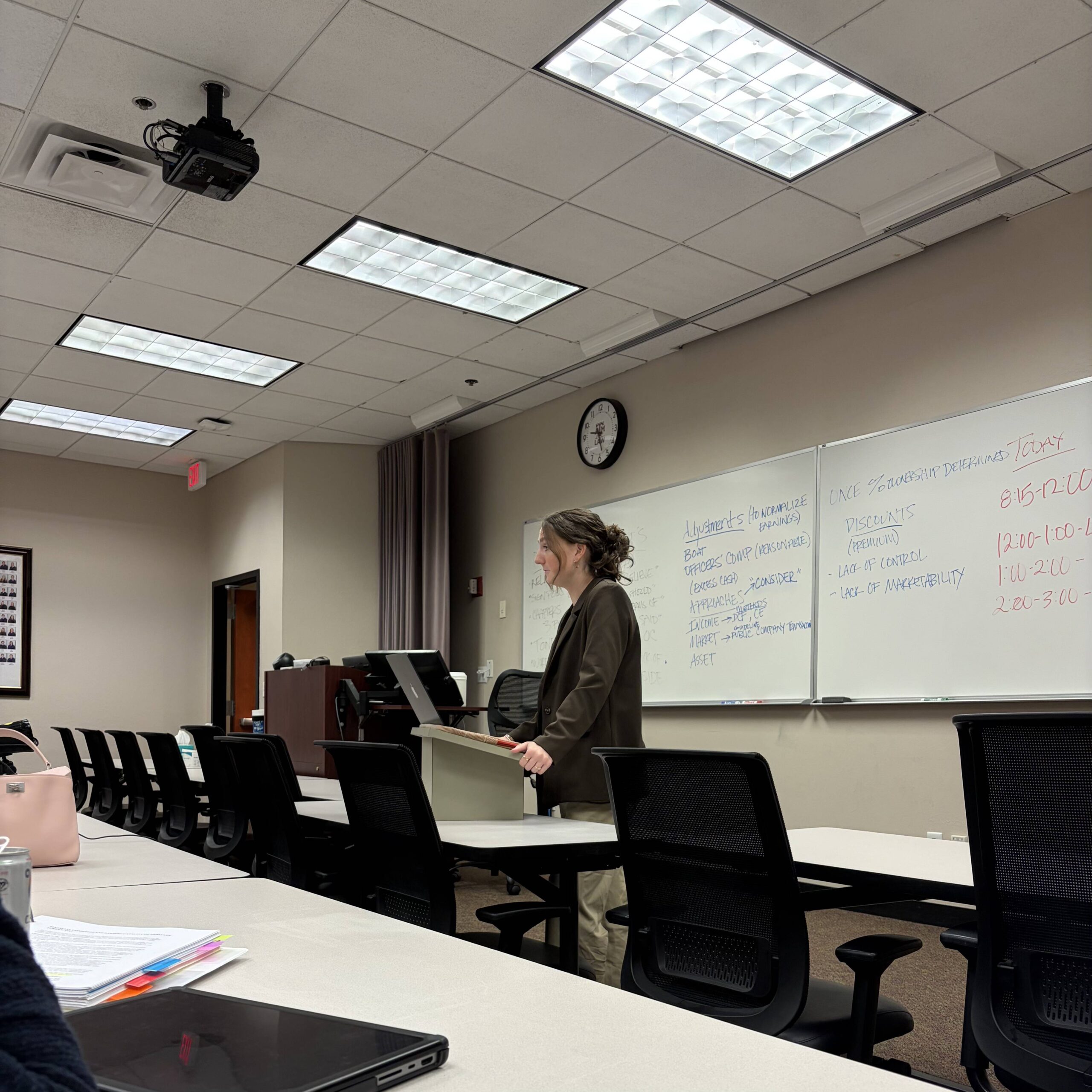
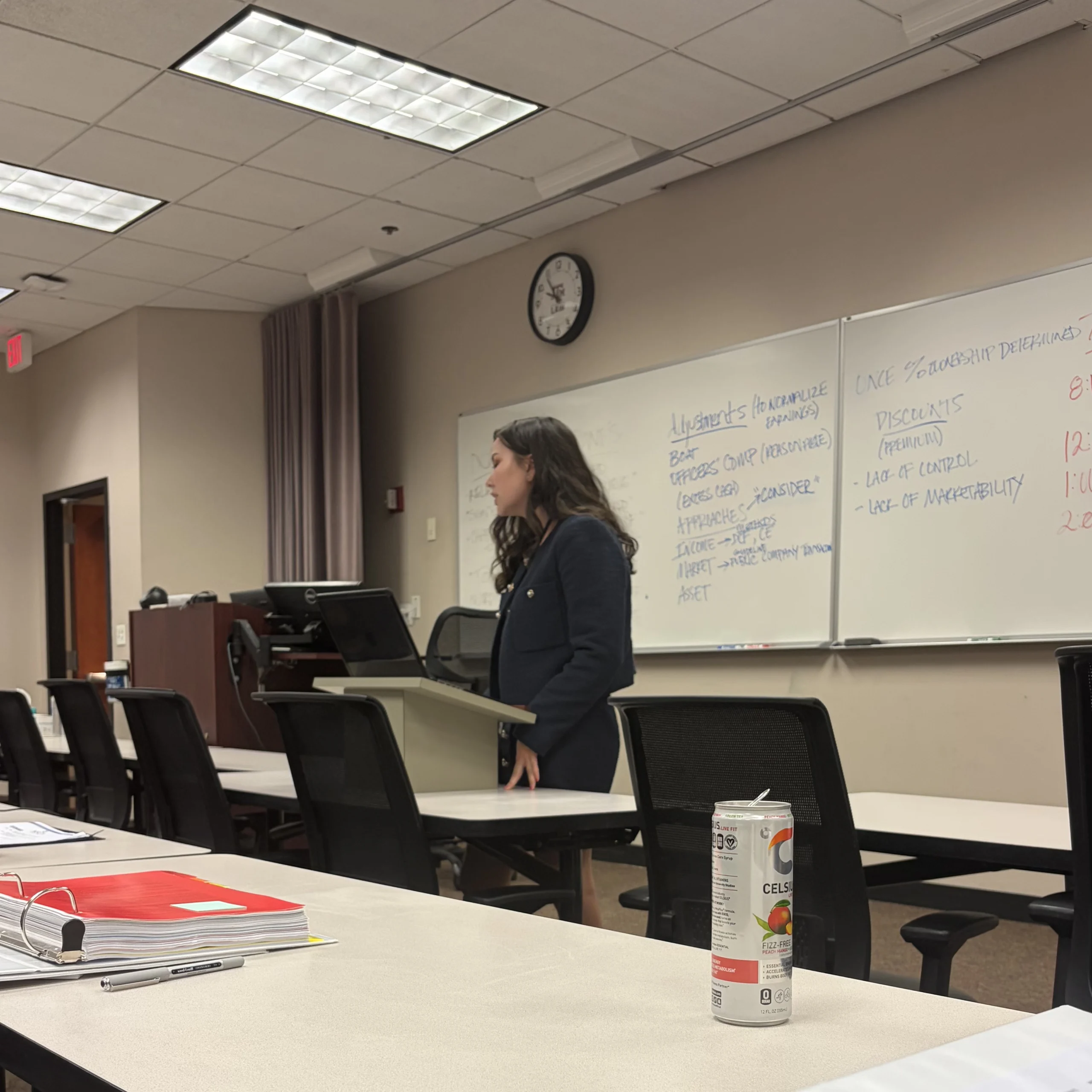
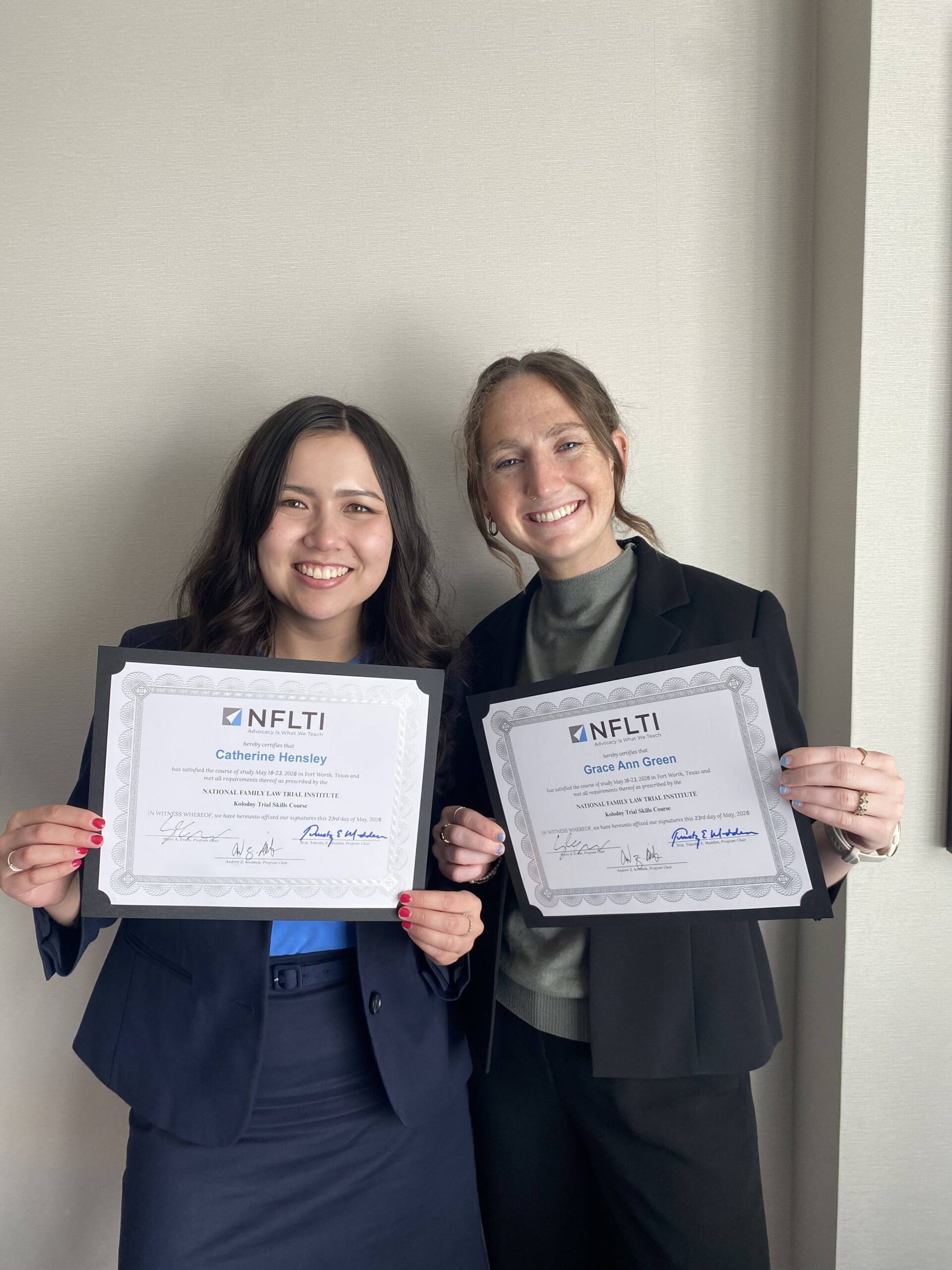
This year, our associates Grace Ann Green completed the eight-day Family Law Trial Advocacy Institute, an immersive, grueling, nationally recognized program that exists for one reason: to take family law attorneys and turn them into trial lawyers who can actually try a family law case.
For eight days, every day, Grace Ann were on their feet. They took depositions in front of expert faculty. They conducted direct examinations and were critiqued, on camera, by some of the best trial lawyers in the country. They cross-examined hostile witnesses. They handled exhibits. They made opening statements and closing arguments. They were stopped mid-sentence, told what they did wrong, asked to do it again, told what they did wrong again, and asked to do it again. They were filmed. They watched themselves on tape. They worked with faculty who have tried hundreds of cases, the kind of lawyers most lawyers only read about, representing Major League baseball players and hedge fund managers, and who do not soften their feedback to spare anyone’s feelings.
It is not a conference. There is no ballroom. There is no PowerPoint. There is a mock courtroom, a witness stand, a faculty member with a clipboard, and the relentless, exhausting, irreplaceable work of getting better at something hard.
Nationally, only a tiny fraction of practicing lawyers are willing to do this. It requires taking over a week away from a practice and from friends and family. It requires a real financial commitment. It requires the humility to be a student again, to stand up in front of strangers and be told you are not as good as you thought you were, and to come back the next morning and try again. Most lawyers, even good ones, never do it. They never put themselves in a room where their work will be evaluated by someone qualified to evaluate it. They never expose themselves to that level of critique.
Grace Ann Green did. That tells you something important about who they are. It tells you they are not satisfied with merely being licensed. It tells you they are not satisfied with the number of years on their bar card. It tells you they want to be skilled and know what they are doing, and they were willing to be uncomfortable, exhausted, and publicly critiqued in pursuit of that.
Grace Ann are also both members of the Association of Family and Conciliation Courts. AFCC is the leading international, interdisciplinary organization dedicated to the resolution of family conflict. Its members are not just lawyers. They include judges, mediators, custody evaluators, mental health professionals, researchers, and academics from around the world who are all working on the same hard problem: how do you resolve family disputes in a way that actually serves the children, the families, and the long-term interests of the people involved?
Belonging to the AFCC is not a credential you frame on a wall. It is an ongoing commitment. It means staying current on the actual research about how children experience divorce. It means understanding the latest thinking on co-parenting plans, on relocation cases, on high-conflict custody disputes, on the role of mental health evaluations, on the science of how courts actually affect families. It means being part of a community of professionals who take this work seriously enough to keep learning about it.
These are not normal commitments. Their peers in Arkansas, Missouri, and Oklahoma aren’t doing any of these things. Their managing partners have not even told them about these kinds of opportunities. But Grace Ann embrace the commitment required of every lawyer who practices at this firm.
Family law is not a transactional practice. The decisions made in our cases follow families for the rest of their lives. The lawyers who treat it as a serious discipline, who join AFCC, who go to its conferences, who read its publications, are the lawyers who are taking that seriously.Grace Ann are those lawyers.
What the Senior Partners Bring
The reason Grace Ann can train at this level is that the firm is led by two senior partners who have already walked this path and who know how to bring younger lawyers along it. Aaron Bundy and Kathleen Egan are both Fellows of the American Academy of Matrimonial Lawyers. The AAML is, by design, a small organization. Fewer than 2,000 lawyers in the entire United States hold Fellowship. Selection to the Academy requires a sustained record of trial work, peer review by other Fellows and by judges, a rigorous examination, and a demonstrated commitment to the highest standards of the family law bar. It is not something you apply for and pay a fee to receive. It is something you earn over many years, in front of peers and judges who know what your work actually looks like.
Aaron and Kathleen are also both board-certified in Family Trial Law by the National Board of Trial Advocacy. Board certification through the NBTA is a separate credential from Fellowship in the Academy, and it requires its own demonstrations: a documented record of contested trial work, substantial recent trial experience, references from judges and opposing counsel, and successful completion of a full-day written examination on family trial law. Most lawyers who hold themselves out as family law attorneys are not board-certified, and most never will be. It is, deliberately, a hard credential to earn and a hard one to keep.
What this means, practically, for a client of our firm and for an associate at our firm, is this: the lawyers running the cases and supervising the work have already done, at the highest level, what we are asking the next generation of lawyers to do. They are not asking Grace Ann to train at the National Family Law Trial Institute as an abstract requirement. They are asking because they know what that training produces, because they themselves practice at that level every day, and because they know how to mentor a younger lawyer into that same standard.
A firm cannot teach a level of practice it has not itself achieved. We have achieved it, and we teach it.
How We Actually Run the Business
Trial skill is half of what a client should expect. The other half is the operational experience of working with the firm: how you are billed, how information is shared with you, how you reach us when you need us, how you know what is happening with your case. This is the part of legal practice that television does not show, but it is the part that clients live with every single day their case is open.
We have rebuilt this from the ground up. Our billing runs through a custom configuration, built on Salesforce, integrated with Confido Legal. What that means in plain language is that your invoices are clear, integrated, accurate, and easy to act on. When you receive a bill from us, you can see what was done, who did it, and how long it took. The bill itself contains an embedded payment link that can be paid directly, securely, from the invoice, without hunting for a portal or calling our office for instructions. There is no mystery and no friction. You see what you owe, you see what it was for, and if you want to pay it you can pay it in the same minute you opened the email.
We added a component to enhance client case status updates as your case moves through its stages, so you are not left wondering what just happened or what is coming next. When a hearing is set, when a discovery deadline passes, when a filing goes in, when a mediation is scheduled, you know, because we tell you, automatically and reliably, rather than because you finally got desperate enough to call. Additionally, we use ShareFile for document exchange. Sensitive documents, such as financial records, custody evaluations, drafts of settlements, move between us through an encrypted, professional platform, not through ordinary email attachments that anyone can intercept and that disappear into inboxes.
Our phone lines are textable. If you cannot talk during the day, you can text the same number you would call. We will see it, and you will get a response. We do not require our clients to communicate on our schedule when modern technology makes it possible to communicate on theirs.
None of this is glamorous. None of it shows up in Law & Order. But anyone who has ever been a client of a lawyer knows that the everyday experience of working with a firm, meaning the bills that either do or do not show where the money went, the calls that are or are not returned, the documents that do or do not show up where they are supposed to, is most of what you remember about the representation. We have designed our operations on the assumption that you deserve to remember it well.
What We Deliver as a Result
Bring all of this together and you get something specific. You get a firm where every lawyer has done the kind of training most lawyers never do. You get a firm led by partners who have achieved, and continue to demonstrate, the highest credentials the family law bar can offer. You get a firm where associates like Grace Ann Green are not just licensed in multiple states and not just experienced but actively, currently, recently trained by the best trial lawyers in the country, and where their membership in AFCC means they are connected to the broader professional community that takes this work seriously. You get billing that makes sense, communication that arrives before you have to ask for it, documents that move securely, and phone lines you can actually text.
What you get, in other words, is the lawyer you expected when you first decided to hire one. Communication you can rely on. Forward motion toward trial readiness from the first week of the case, not the week before the trial date. The ability, whether at mediation, at a temporary order hearing, or at a final trial, to tell your story clearly, accurately, and persuasively, no matter how complicated the financial picture, no matter how contentious the custody dispute, no matter how high the stakes.
The lawyers on television are prepared because the writers have written them that way. The lawyers at our firm are prepared because we built a firm in which there is no other option.
That is the standard. Every client we take on is entitled to it.